

With over 500,000 loads of logs transported by truck each year in BC, log hauling is key to the success of the industry. Safe roads, vehicles and workers are vital to ensure everyone gets home safe – every day.
Our log hauling resources and tools aim to reduce injuries and fatalities, to improve the health and safety of workers and to strengthen safety performance for Contractors and Licensees.
We offer free Transportation Safety Resources including safety guidelines, brochures, stickers, posters and videos (such as Radio Use and Road Calling Procedures) to keep you safe on the road.
Over the years, BCFSC Transportation Safety has worked with industry experts and advisory groups to develop programs, research studies and safety materials flagged as high-risk topics to log haulers. Professional Industry Driver Training, Professional Log Truck Driver Assessment and Endorsement, Driver Fatigue and Load Securement are key areas of focus for driver safety.
Professional Industry Driver Training Program
This program has been developed by the Log Truck Technical Advisory Group (LTTAC) and the Wood Fibre Hauling Safety Group (WFHSG) and endorsed by the Trucking and Harvesting Advisory Group (TAG) as a key initiative to standardize the level of training for Professional Industry Drivers.
Learn More about the Professional Industry Driver Training Program
Professional Log Truck Driver Assessment and Endorsement Program
This program has been developed by the Log Truck Technical Advisory Group (LTTAC) and endorsed by the Trucking and Harvesting Advisory Group (TAG) as a key initiative to standardize the level of training and assessment for Professional Log Truck Drivers.
Learn More about the Professional Log Truck Driver Assessment and Endorsement Program
Fatigue Management
Log Haulers are a high-risk group for fatigue-related MVI’s. Drivers must be able to react quickly, stay focused and make the right decisions to safely operate a vehicle.
BCFSC and Trucking and Harvesting Advisory Group (TAG) have worked with industry experts to conduct research, develop Best Management Practices, Fatigue Assessment tools and resources directly related to Fatigue Management.
Load Securement
In late 2021, WorkSafeBC announced changes to the Log Load Securement regulations. In anticipation of these changes, the Load Securement Working Group (LSWG) and FPInnovations have initiated a load securement research project to identify load securement options, processes, techniques, tools and resources to help reduce or eliminate load securement injuries.
FPInnovations Load Securement Report – Phase 1
FPInnovations Load Securement Report – Phase 2
FPInnovations Load Securement Report – Phase 3 Exte Com90
FPInnovations Load Securement Report – Phase 3 Exte Com90 Update
Phase Two Contractor Toolboxes:
Technique Demonstration Videos
|
Technique Demonstration: Improved Throwing Method C
|
Technique Demonstration: Throw Assist Using a Pole
|
|
Technique Demonstration: Underhand Throw Using Lead Rope
|
Technique Demonstration: Elevated Platform
|
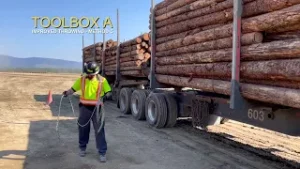

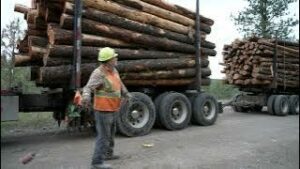
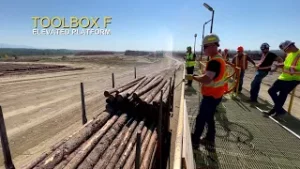
Proper load securement is vital for safe log hauling operations. Back and shoulder injuries are common risks for log haul drivers when throwing wrappers over loads. Using a log loader to place wrappers is one way to reduce injury risks but this process presents other risks that must be managed. This video explains risk assessment criteria and a process employers can use to develop an effective safe work procedure for loader assist.
Long-term solutions currently being researched include:
- Automated load securement systems
Cinch Hooks / Load Binders
WorkSafeBC regulations prohibit welding a hook onto cinch hook handles as it presents an unacceptable risk and can compromise the structural integrity of the cinch handle and create the hazard causing the handle to break while the trucker is closing it.
Review the WorkSafeBC Guideline G26.68 for more information.
Read the Load Securement Bulletin relating to the National Safety Code Standards for log wrappers and binders.
It has been identified that many lost time incidents are caused by MSI injuries related to load securement. In addition, it is a requirement under WSBC regulation to have a risk assessment completed for loading activities. The Load Securement Risk Assessment Tool is the result of a collaborative approach by the BC Forest Industry to both address regulatory requirements and reduce log hauling injuries related to load securement.
MSI Load Securement Risk Assessment Tool
Guideline for Manufacturing Steel Wire Rope Log Wrappers
This document has been developed by the Log Truck Technical Advisory Committee (LTTAC), a forest industry working group focused on improving safety performance in log hauling. The information contained within this document is intended to provide technical data and direction with regards to the manufacture of wrappers designed for the purpose of log load securement from both an operational, technical, and regulatory perspective.
Steep Grade Descent Tools
WorkSafeBC Regulation 26.16 and the associated Guideline 26.2-2 describe requirements regarding hauling logs on steep grades (greater than 18%), a risk assessment is conducted and safe descent procedures are developed.
FPInnovations has developed a new Android app available for mobile devices to help determine appropriate payloads and descent speeds for loaded log-hauling trucks travelling on slopes with curves, as well as on inclines greater than 18%.
The Steep Grade Descent (SGD) Guidelines app is based on a spreadsheet tool and allows users to input various road parameters such as grade, length, the presence of a switchback, and traction level. The app predicts safe loads and operating speeds for specific road conditions, also entered into the app. If the specified conditions pose too high a risk, then additional measures such as revised road parameters (grades and traction) must be considered to ensure safe hauling.
The app is developed for highway trucks with 42 cm (16.5 inch) diameter brake drums with a payload of 60 tonnes. For a truck configuration to be acceptable, it must be able to stop on a steep pitch using only its service brakes in the event of a driveline failure.
We are interested to hear how you are using this tool, and would be pleased to apply it in the field with you. Based on your feedback, further development of these tools may be undertaken for other axle configurations (e.g. super B-trains, quad-axle trailers), short logs and winter conditions.
Additional Resources
Anti-lock Braking System (ABS)
ABS Maintenance Guide for Forestry Log Hauling created by FPInnovations
Chain Up
CVSE chain up regulations
Stricter Regulations for Commercial Drivers Will Improve Highway Safety
What You Need to Know About Stricter Chain-Up Rules
Drug & Alcohol Testing
Resources have been developed to help forest industry employers create and implement effective alcohol and drug impairment policies and programs for their workplace.
ELD (or ELOG)
As of June 12, 2021, commercial vehicles crossing provincial borders are required to be equipped with an ELD.
In response to these changes to the Commercial Vehicle Drivers Hours of Service Regulations, BC will need to decide what the requirements will be for CMVs operating within the province.
Check out how drivers are reacting to using this new technology.
Many log hauling fleets are using Electronic Logging Devices (ELDs) to track hours and maintain their records. These systems save valuable time and help drivers easily and accurately record their Hours of Service. Check out this new video A Day in the Life – Using ELDs that shows just how easy it is to use ELDs.
Greg Munden provides An Unbiased Guide to ELD Implementation from his experience implementing ELD’s in a small Canadian trucking company.
Log Book
Log books must be kept up to date, kept in your truck and available if requested by an authorized inspection person. Log books must also have records for 14 duty days (14 duty days may or may not be the previous 14 calendar days).
BCFSC, in collaboration with our member logging associations, has developed an Integrated Log Book for highway and off-highway drivers. All regulatory agencies have reviewed it and confirmed that if completed in full, it meets their requirements.
Download the BCFSC Integrated Log Book.
Molly Lift Strap Safety Inspection
Lift strap (or molly) failures present significant safety risks to log truck drivers. That’s why it is crucial that lift straps are regularly inspected and replaced when required. This video explains an inspection process, what to look for, and when lift straps must be taken out of service/replaced.
Download the list of Molly Defects.
Injury Prevention Resources
3 Point Contact
A leading cause of injury for truck and machine operators is failing to safely mount or dismount their vehicle.
3 Point Contact, the practice of always having 3 secure points of contact when mounting or dismounting a vehicle, has been proven to reduce the number of injuries incurred when operators enter and exit their vehicles.
Click here for 3 Point Contact resources.
Preventing MSIs
Click here for a series of videos and posters developed as an initiative led by the Log Truck Technical Advisory Committee (LTTAC).
Seatbelt Safety
Click here for TAG created resources related to seatbelt safety.
Emergency Response Planning
ERP: Equipment Rollover and Operator Extraction Procedures
ERP: Operator Extraction and Steep Slope Rescue Drill
ERP: Air Medivac Procedures Part 1 – Planning Requirements
ERP: Air Medivac Procedures Part 2 – Practice Drills